
Colorado County Parole Versus Probation
Parole is conditional release from a state prison sentence. The Texas Board of Pardons and Paroles makes the release decision, and the Texas Department of Criminal Justice Parole Division supervises the releasee. Mandatory supervision is another form of state post-prison supervision governed by Texas law and Board review rules. Probation, formally called community supervision, is ordered by a county or district court and managed locally by a Community Supervision and Corrections Department. It may begin without any TDCJ confinement.
The distinction changes the record path. A Colorado County probation order should appear in the criminal case maintained by the County Clerk for county-level matters or the District Clerk for district felonies. State parole review and release status belong to TDCJ and the Board. Neither office should be asked to certify the other system.
| Question | Probation | Parole |
|---|---|---|
| Who orders it? | Sentencing court | Board decision after a prison sentence |
| Who supervises? | 2nd 25th Judicial District CSCD | TDCJ Parole Division |
| Best durable record | Judgment and supervision orders | TDCJ history, Board vote, release record |
| Does it prove prison release? | No | Only after actual release is confirmed |
Verify Colorado County Probation
Start with the filed criminal case. Search by full name and narrow the result by cause number, filing date, charge, court, and other identifiers. Read the signed judgment, not just a docket label. A probation record may include the term, conditions, an amendment, a motion to revoke, a revocation order, or a discharge order. Jail credit may explain time already served, but it is separate from the supervision term.
- Identify whether the case is county-level or district felony jurisdiction.
- Retrieve the judgment from the correct Colorado County clerk.
- Confirm that the order places the person on community supervision.
- Check later docket events for modification, revocation, or discharge.
- Use the local CSCD for current office routing, subject to confidentiality limits.
The 2nd 25th Judicial District CSCD serves Colorado, Gonzales, and Lavaca Counties. Its Colorado County office is the local reporting point, but an office may not disclose an individual schedule or protected case detail. The court file remains the durable public source for the legal status.
Colorado County Probation Office
The county’s official community-supervision page supplies the current local contact. TDCJ’s CSCD directory confirms the multi-county department structure. Contact details can change, so check the linked directory before travel or mailing records.
2nd 25th Judicial District CSCDColorado County Office
1023 Milam Street
Columbus, TX 78934
979-732-8321
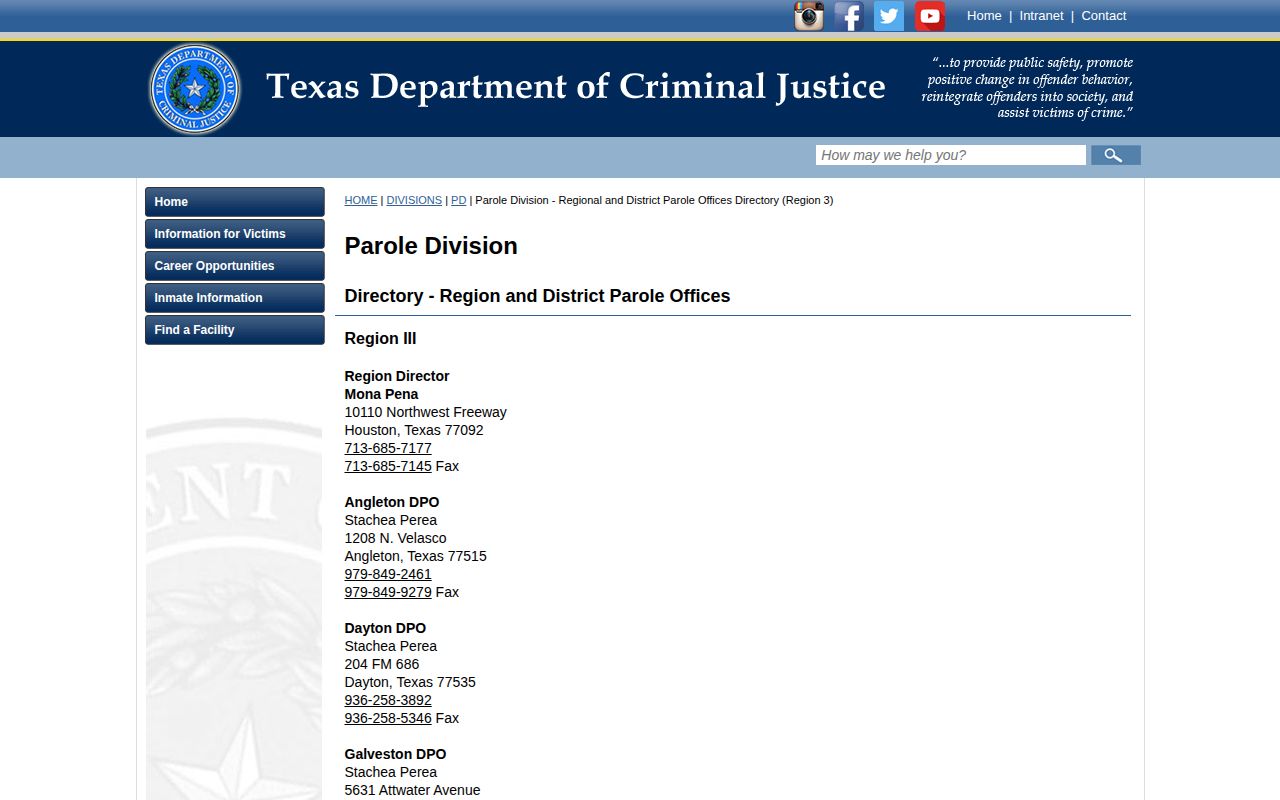
The official regional capture reinforces that Rosenberg is the county-directory route, while individual assignment still requires confirmation.
This office administers court supervision. It is not a jail, prison, booking desk, or release gate. A person reporting there may have begun probation from court, after a short county-jail term, or under another order. That contact does not establish a prior TDCJ release.
Check Colorado County Parole Status
For state parole, first establish the correct TDCJ identity. A TDCJ number or State Identification number is stronger than a name alone. The public TDCJ inmate search covers people currently incarcerated in TDCJ, not a complete archive of discharged prisoners. Its projected date and parole-eligibility fields describe possible future stages. They do not certify that a release happened.
When the public result is missing or unclear, use the official TDCJ inmate-information email process. Provide full name and the seven-digit TDCJ number. If unknown, provide exact birth date or approximate age and county of conviction. Ask for incarceration history, actual release or discharge date, and legal manner of release. Formal historical records use the TDCJ Public Information Act route.
Colorado County Has No Parole Calendar
The Board does not hold an ordinary formal, person-by-person hearing for parole or mandatory-release consideration. Its official panel-review explanation says members vote the file individually. A public Board meeting agenda or revocation hearing is therefore not a substitute for a release-review calendar.
The review process generally identifies cases months ahead, allows an institutional parole officer to develop the case summary, and sends the file to a three-member panel until two votes agree. Decision codes matter. FI codes are favorable outcomes with varying timing or program terms; NR sets a later review, SA means serve all, and DMS denies mandatory supervision. The official vote-code list should control interpretation. Approval can also be withdrawn if new information emerges.
Before a vote, TDCJ lists a Board review-status line at 844-512-0461. After a favorable vote, the Parole Division release-status line is 512-406-5202. Read the code, then obtain the scheduled date and release unit after processing. Finally confirm the actual departure.
Where Colorado County Parole Reports
TDCJ maps Colorado County to the Rosenberg District Parole Office in Region III. That is not an office in Columbus, and it is not the Colorado County probation department. The county-to-office directory provides the routing map, while the Region III page provides current contact information.
Rosenberg District Parole Office711 Highway 36 North
Rosenberg, TX 77471
281-232-0334
An individual assignment follows the approved release address, not the county of conviction by itself. A person convicted in Colorado County may report elsewhere. Conversely, someone convicted elsewhere may report through Rosenberg after approval to reside in its service area. A halfway house or residential setting may also shape the first reporting route.
This address-driven distinction is Colorado County’s key supervision fact. Confirm the assigned office with TDCJ using the person’s identifier and current public status before relying on the regional map.
From Colorado County Jail to Supervision
Leaving the Colorado County Detention Facility can lead to several outcomes. Bond, dismissal, time served, or another court release may return a person to the community. A court can impose probation. A felony commitment can instead transfer the person into TDCJ custody, where parole may occur later. Another warrant, federal detainer, or immigration hold can cause a further custodial transfer.
Confirm the first event through the Jail Division and release record. Then follow the receiving system. For a local release, pair the book-out event with the court judgment. For a TDCJ transfer, use the state search and later historical inquiry. For parole, join the Board vote and TDCJ release date with the assigned supervision office. The Colorado County released-inmate search path explains how these records fit together.
- Discharge
- The sentence has ended under the controlling state record.
- Absconder
- A supervised person is alleged to have stopped reporting or complying; it is not proof of present jail custody.
- Detainer
- A request or hold from another authority that may change the release destination.
Texas also has a specialized sex-offender absconder search. It covers only that defined population and should never be treated as a list of all parolees. Verify any active warrant with the issuing authority.
Colorado County Supervision Splits
The local geography creates a useful records test. TDCJ’s county directory routes Colorado County parole questions to Rosenberg in Region III, while the 2nd 25th Judicial District CSCD maintains its Colorado County probation office in Columbus. These are not alternate counters for the same record. The Rosenberg office belongs to the state Parole Division. The Columbus office carries out probation orders entered by county and district courts.
Start with the legal source. A TDCJ number, Board vote, release certificate, or state incarceration history points toward parole or mandatory supervision. A Colorado County judgment ordering community supervision points toward probation. If both systems appear in a person’s history, identify the event and date being verified rather than asking either office for a lifetime status summary.
The approved residence remains decisive for parole assignment. TDCJ may approve an address outside Colorado County and assign another district office. The county-to-office map is a routing aid, not proof of an individual assignment. Confirm the office through current TDCJ information before mailing a request or relying on a regional listing.
From Texas Vote to Release
A Board approval is one stage in the state process. TDCJ must process the release certificate, evaluate the release plan, apply any program conditions, calculate the operative date, and identify the release unit. A detainer or new information can affect what happens next. The official vote code should be reported with its meaning rather than shortened to “parole granted.”
FI-1 generally indicates release when eligible. Other favorable FI codes can identify a future month or a required program. RMS concerns release to mandatory supervision. Denial codes can set another review, require service of the remaining term, or deny mandatory supervision. Approval can also be withdrawn. The Board’s current vote-options page is the source for the exact code.
After processing, ask TDCJ for the scheduled date and release unit, then verify the actual release. A scheduled date is still subject to change. Supervision begins only when the state releases the person under the applicable authority; parole eligibility and a favorable vote do not by themselves establish a departure from prison.
When Colorado County Supervision Ends
Probation and parole end through different records. For probation, search the court docket for a discharge order, revocation, or other final action. Elapsed time alone is not enough because the court may amend the term or act on a pending matter. For parole, use TDCJ history and Parole Division records to distinguish active supervision from full sentence discharge.
A discharge generally means the controlling sentence or supervision obligation ended under the source record. It does not mean the same thing as release on parole, which leaves a person subject to conditions. Preserve the agency’s term and date. If public sources conflict, request the filed court order or state history instead of choosing the newest-looking screen.